I'm Julia. Before design I spent eight years in sports medicine: athletic training at Fort Lewis College, sports medicine at Utah, training rooms from Durango to UMass Amherst, and a Division I sports science practice at CU Boulder that I built from scratch.
Training rooms teach you a specific kind of seeing: the person in front of you is always telling you something the data hasn't caught up to yet. I design the way I trained. Look first, measure honestly, adjust without ego.
Now I'm in Denver designing products, and the two lives have finally converged: my current project is a readiness platform for the coaches and trainers I used to work beside.
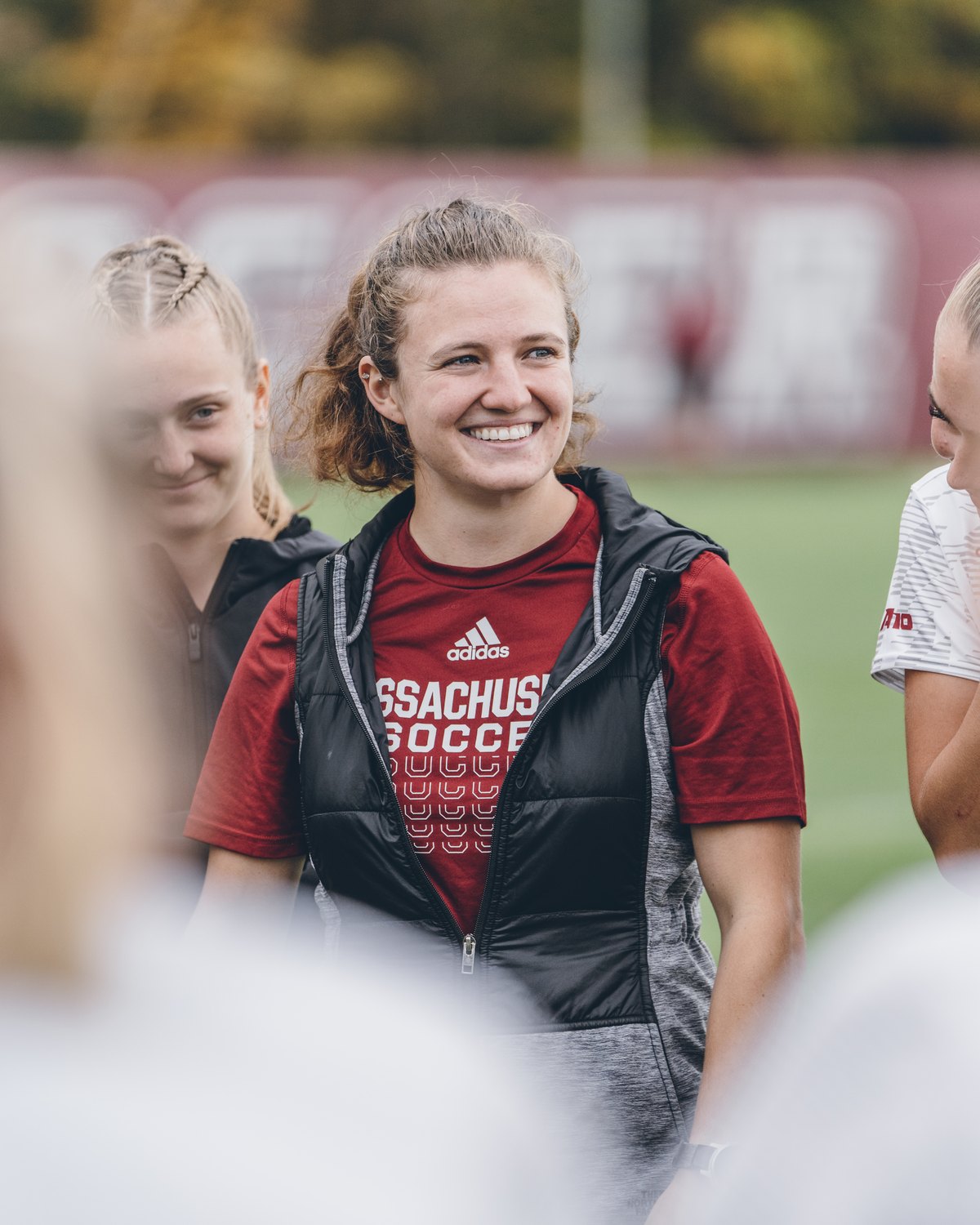
PortraitBA in Athletic Training at Fort Lewis College, summa cum laude, then an MS in Sports Medicine at the University of Utah, magna cum laude, with shifts on the REI sales floor along the way. The degrees set the pattern: evidence first. Physiology doesn't care what you'd prefer to be true, and neither do users.
Athletic trainer at Fort Lewis, then UMass Amherst, where I also taught as an adjunct professor and earned a Chancellor's Award. At CU Boulder I built the women's lacrosse program's first sports science practice, turning VALD, Catapult, Polar, and WHOOP data into calls coaches would actually act on: speed up more than 1 MPH in a year, overuse injuries down 50% over two. Stakeholder management, except the stakes are somebody's knee.
A product design role at VIMworld, a 480 hour design immersive at General Assembly, client work for PositiveHire, and now an independent readiness platform for performance staff, the product I'm most qualified on earth to design. Same loop as the training room: assess, test, adjust.
Athletic trainers work at the intersection of data and people who distrust it. An athlete says they're fine; the hop test says otherwise; the coach needs a decision by Friday. That's product work. The numbers, the interview, and the deadline never quite agree, and someone has to make a defensible call anyway.
It also builds a specific honesty. In a training room a wrong call gets found out, on the field, in public, on a timeline you don't control. I bring that expectation to design: ship the version that holds up when it's tested, because it will be.
Off hours I'm usually in the wood shop building furniture, or in the San Juans with my wife and our dogs, camping out of a truck we've rigged for staying out longer than planned.
Looking for a product design role. If you're building something where evidence matters, or where the users are athletes, coaches, or the people who keep them going, I'd like to hear about it.